
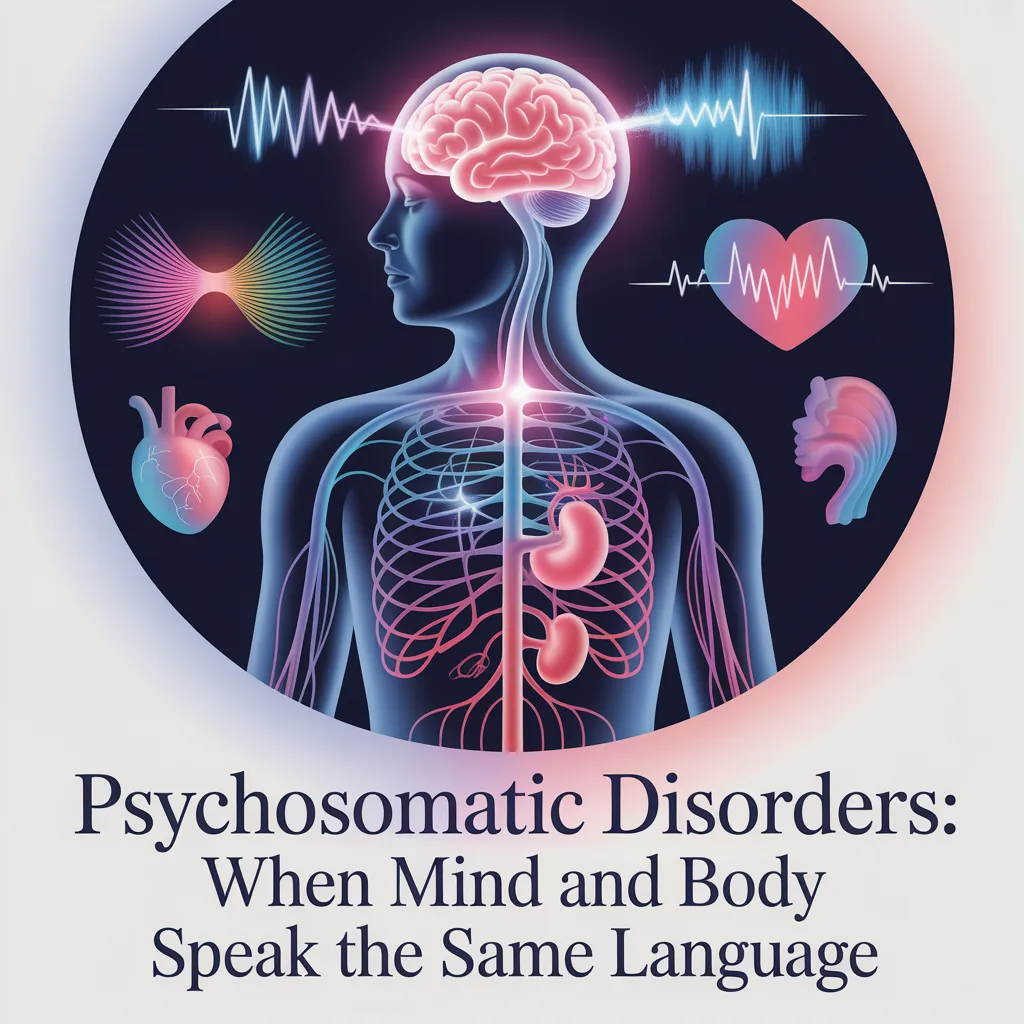
A patient once walked into therapy with chronic back pain that had persisted for years. Multiple scans, medications, and treatments brought no relief. But as therapy progressed, something unexpected happened—when unresolved grief was finally processed, the pain began to fade.
This is psychosomatic disorders in action.
So, what are psychosomatic disorders? Psychosomatic disorders refer to physical symptoms that are triggered or worsened by emotional or psychological stress, often without a clear medical cause. According to clinical frameworks like the DSM-5, these symptoms are very real—impacting the body in measurable ways.
Why does this matter? Studies suggest that 30–50% of primary care visits are linked to stress-related or psychosomatic symptoms. This makes psychosomatic disorders a critical bridge between mental and physical health.
In this article, we’ll explore:
- Psychosomatic disorder types
- Symptoms and sensations
- Causes from scientific and psychological perspectives
- Evidence-based treatments
- Practical ways to stop psychosomatic symptoms
What Are Psychosomatic Disorders? Definition and Common Misconceptions
The term breaks down simply:
- “Psycho” = mind
- “Somatic” = body
Together, psychosomatic disorders describe how mental and emotional stress manifests physically—for example, tension headaches caused by anxiety or stomach pain triggered by stress.
Psychosomatic vs. Somatization
While often used interchangeably, there’s a distinction:
- Psychosomatic responses can be temporary and stress-triggered
- Somatization refers to chronic, recurring physical symptoms without a clear medical explanation
Psychosomatic Anxiety Disorder
A key subtype is psychosomatic anxiety disorder, where anxiety directly produces physical symptoms such as:
- Rapid heartbeat
- Shortness of breath
- Dizziness
These symptoms can feel so intense that they mimic serious medical conditions like heart attacks.
Debunking Common Myths
One of the biggest misconceptions is that psychosomatic disorders are “all in your head.”
This is not true.
Scientific research shows:
- Elevated cortisol (stress hormone)
- Increased inflammation
- Nervous system dysregulation
These prove that psychosomatic symptoms are biologically real, even if the root cause is psychological.
Psychosomatic Disorder Types: A Breakdown of Common Forms
Psychosomatic disorders are often categorized based on the body system affected.
Gastrointestinal Disorders
- Irritable Bowel Syndrome (IBS)
- Stress-induced nausea or indigestion
Pain-Related Disorders
- Tension headaches
- Migraines
- Fibromyalgia flare-ups
Respiratory Issues
- Asthma triggered or worsened by stress
Cardiovascular Symptoms
- Heart palpitations
- Chest tightness due to anxiety
Dermatological Conditions
- Eczema
- Hives
- Stress-related skin flare-ups
Spotlight: Psychosomatic Anxiety Disorder
This form deserves special attention because it often leads to:
- Panic-like symptoms
- Fear of serious illness
- Repeated medical visits
Despite normal test results, symptoms feel intense and real.
What Are the Seven Psychosomatic Diseases? Key Examples
Clinically, some of the most recognized psychosomatic disorders include:
- Irritable Bowel Syndrome (IBS)
- Tension-type headaches and migraines
- Fibromyalgia
- Chronic fatigue syndrome
- Non-cardiac chest pain
- Functional dyspepsia
- Psychogenic nonepileptic seizures
Research has linked these conditions to stress biomarkers such as:
- Hormonal imbalances
- Nervous system dysregulation
- Immune system activation
These disorders often overlap with major psychological conditions like:
- Anxiety
- Depression
- PTSD
- Somatic symptom disorder
- Illness anxiety disorder
What Does Psychosomatic Pain Feel Like? Symptoms and Sensations
Psychosomatic pain can vary widely, but patients often describe it as:
- Tight or constricting
- Burning or throbbing
- Sharp or “electric” sensations
- Persistent without visible cause
Associated Symptoms
- Fatigue
- Digestive issues
- Sleep disturbances
- Emotional numbness or overwhelm
Diagnostic Clues
- Symptoms worsen during stress
- Medical tests come back normal
- Pain shifts or changes location
Helpful Tool: Symptom Journal
Tracking patterns can help identify triggers. Include:
- Time of symptom
- Emotional state
- Stress level
- Physical intensity
This can reveal powerful mind-body connections.
Causes of Psychosomatic Disorders: Mind-Body Connections
Biological Perspective
The body’s stress system, known as the HPA axis, becomes overactive:
- Cortisol floods the body
- Nervous system remains on high alert
This can mimic real illness.
Psychological Factors
- Repressed trauma
- Chronic stress
- Perfectionism
- High emotional sensitivity
For example, individuals with “Type A” personalities may internalize stress, leading to physical symptoms.
Social and Cultural Influences
- Mental health stigma
- Limited emotional expression
- Higher diagnosis rates in women
Holistic Perspective
Practices like:
- Yoga
- Breathwork
- Mindfulness
have shown strong benefits in regulating the nervous system and reducing symptoms.
Treating Psychosomatic Disorders: Evidence-Based Strategies
Treating psychosomatic disorders requires an integrated approach—addressing both mind and body.
Cognitive Behavioral Therapy (CBT)
- Helps reframe thoughts about pain
- Reduces fear and symptom focus
Biofeedback and HRV Training
- Teaches control over physiological responses
- Improves stress regulation
Medications
- SSRIs can help regulate mood and pain perception
Multidisciplinary Approach
Often involves:
- Medical doctors
- Therapists
- Specialists (e.g., gastroenterologists)
Success Rates
Studies show 60–80% improvement with proper treatment.
How Do You Stop Psychosomatic Symptoms? Practical Steps
Step 1: Track and Label Symptoms
Recognize:“This is my body responding to stress.”
Step 2: Practice Mind-Body Techniques
- Deep breathing
- Progressive muscle relaxation
- Meditation
Step 3: Process Emotions
- Journaling
- Therapy (e.g., EMDR)
Step 4: Improve Lifestyle
- Sleep hygiene
- Gentle movement (like yoga)
- Balanced routine
Step 5: Seek Professional Help
If symptoms persist for more than 6 weeks, professional guidance is essential.
Quick Daily Routine (5 Minutes)
- 1 minute deep breathing
- 2 minutes body awareness
- 2 minutes journaling
What Are the Top 5 Psychological Disorders Linked to Psychosomatic Issues?
- Anxiety disorders (including psychosomatic anxiety disorder)
- Major depressive disorder
- Post-traumatic stress disorder (PTSD)
- Somatic symptom disorder
- Illness anxiety disorder
Shared Mechanisms
- Nervous system imbalance
- Stress hormone dysregulation
- Heightened body awareness
Conclusion: Healing Psychosomatic Disorders Holistically
Psychosomatic disorders remind us that the mind and body are deeply connected.
These symptoms are not imaginary—they are signals.
By addressing both emotional and physical health, true healing becomes possible.
If you’re experiencing ongoing unexplained symptoms, start by becoming aware of your patterns—and consider seeking professional guidance to explore deeper causes.
Take the First Step Toward Mind-Body Healing
You don’t have to navigate psychosomatic symptoms alone.
If stress, anxiety, or unexplained physical symptoms are affecting your daily life, getting the right support can make a meaningful difference. Platforms like SafeSpace offer accessible, personalized mental health support to help you understand and manage the connection between your mind and body.
Taking that first step toward support could be the turning point in your healing journey.
FAQs: Quick Answers on Psychosomatic Disorders
What are the seven psychosomatic diseases?
- IBS
- Tension headaches
- Fibromyalgia
- Chronic fatigue syndrome
- Non-cardiac chest pain
- Functional dyspepsia
- Psychogenic seizures
How do you stop psychosomatic symptoms?
- Track triggers
- Practice relaxation
- Process emotions
- Improve lifestyle
- Seek therapy
What does psychosomatic pain feel like?
Tight, burning, shifting pain is often linked to emotional stress.
What are the top 5 psychological disorders?
- Anxiety
- Depression
- PTSD
- Somatic symptom disorder
- Illness anxiety disorder
Best ways for treating psychosomatic disorders?
CBT, biofeedback, medication, and holistic approaches.