
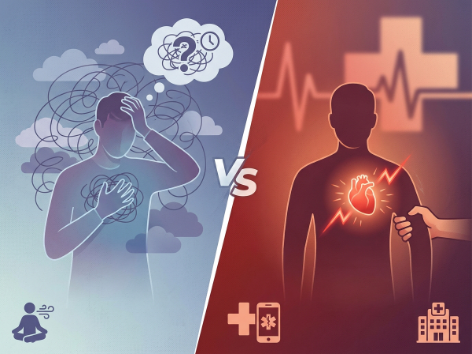
Chest pain, shortness of breath, dizziness, sweating, or a racing heartbeat can feel frightening—especially when symptoms appear suddenly. In moments like these, many people immediately wonder: Am I having a heart attack, or is this a panic attack?
The confusion is understandable. Panic attacks and heart attacks can feel surprisingly similar, sharing symptoms such as chest discomfort, rapid heartbeat, nausea, sweating, and breathing difficulties. Yet while one is primarily linked to anxiety and the body’s stress response, the other is a serious medical emergency that requires immediate treatment.
Understanding the difference between a panic attack and a heart attack can help you make informed decisions about when to seek urgent care and when mental health support may be needed. At the same time, chest pain should never be ignored, especially if symptoms are severe or unfamiliar.
Why Panic Attacks and Heart Attacks Feel Similar
One of the main reasons people confuse panic attacks with heart attacks is that both affect the body in intense physical ways.
A heart attack occurs when blood flow to the heart becomes blocked or significantly reduced, often due to narrowed arteries caused by plaque buildup. Without adequate oxygen, the heart muscle becomes damaged.
A panic attack, on the other hand, is caused by an intense activation of the body’s stress response. When the brain perceives danger—whether physical or emotional—it releases stress hormones that trigger the “fight-or-flight” response. This sudden surge can lead to rapid breathing, increased heart rate, chest tightness, dizziness, and overwhelming fear.
Because both conditions involve the chest, breathing, and heart rate, symptoms may overlap.
Symptoms Shared by Both Conditions
Both panic attacks and heart attacks can include:
- Chest pain or pressure
- Shortness of breath
- Sweating or cold sweats
- Nausea or stomach discomfort
- Dizziness or lightheadedness
- Rapid heartbeat or palpitations
- Tingling sensations
- A feeling of fear or distress
Despite these similarities, important differences often help distinguish one from the other.
What Is a Panic Attack?
A panic attack is a sudden episode of intense fear or discomfort that causes severe physical and emotional symptoms. Some panic attacks happen unexpectedly, while others may be triggered by stress, trauma, social anxiety, health fears, or overwhelming emotions.
Although panic attacks are not medically dangerous, they can feel extremely intense. Many people experiencing one for the first time genuinely believe they are having a heart attack or medical emergency.
Common Symptoms of a Panic Attack
Panic attacks may involve:
- Racing heartbeat
- Tightness or sharp pain in the chest
- Difficulty breathing or hyperventilation
- Trembling or shaking
- Sweating or chills
- Tingling in the hands, face, or feet
- Feeling detached from reality
- Fear of losing control
- A strong sense of impending doom
How Long Does a Panic Attack Last?
Most panic attacks reach peak intensity within 10 to 20 minutes, though lingering anxiety may continue for up to an hour or longer.
Importantly, panic symptoms often begin improving once the nervous system calms down.
What Is a Heart Attack?
A heart attack, medically known as a myocardial infarction, occurs when blood flow to the heart muscle becomes blocked.
Without treatment, heart attacks can lead to serious complications or even death. Immediate medical attention is essential.
Common Symptoms of a Heart Attack
Symptoms often include:
- Pressure, heaviness, or squeezing chest pain
- Pain spreading to the arm, jaw, shoulder, neck, or back
- Shortness of breath
- Nausea or vomiting
- Cold sweats
- Fatigue or weakness
- Dizziness or fainting
Heart attack symptoms may appear suddenly or gradually worsen over time.
Heart Attack Symptoms in Women
Women sometimes experience less obvious warning signs, including:
- Unusual fatigue
- Neck or jaw pain
- Upper back discomfort
- Nausea or indigestion
- Mild chest pressure rather than severe pain
Because symptoms may appear different from traditional expectations, women are sometimes more likely to delay treatment.
Panic Attack vs. Heart Attack: Key Differences
Although symptoms overlap, certain clues may help you understand what may be happening.
1. Is the Pain Moving?
One of the clearest distinctions is where the pain travels.
Panic Attack
Chest pain from a panic attack usually:
- Stays concentrated in one area
- Feels sharp or stabbing
- May worsen with rapid breathing
Heart Attack
Heart attack pain often:
- Feels crushing, squeezing, or heavy
- Radiates to the left arm, jaw, shoulder, neck, or back
- Persists or spreads over time
If pain is moving through different areas of the upper body, emergency care is important.
2. Is the Pain Getting Better or Worse?
Ask yourself whether symptoms are improving.
Panic Attack
Panic attacks often ease within 20–30 minutes, especially after stress decreases or calming techniques are used.
Heart Attack
Heart attack symptoms usually continue, intensify, or come in waves without medical treatment.
Symptoms that steadily worsen should never be ignored.
3. Were You Under Emotional Stress or Physical Exertion?
Triggers can also offer important clues.
Panic Attack Triggers
Panic attacks may be connected to:
- Anxiety or chronic stress
- Emotional overwhelm
- Trauma reminders
- Crowded or overstimulating environments
- Health fears or catastrophic thinking
Heart Attack Triggers
Heart attacks are sometimes triggered by:
- Physical exertion
- Heavy lifting
- Exercise outside normal activity levels
- Cold weather strain (such as shoveling snow)
However, heart attacks can also happen while resting.
4. How Long Have Symptoms Lasted?
Panic symptoms typically peak quickly and begin settling within minutes.
Heart attack symptoms often persist, intensify, or repeatedly return.
Questions to Ask Yourself During Chest Pain
If symptoms appear suddenly, consider these questions:
Is the pain spreading to my jaw, arm, neck, or back?
Radiating pain is more commonly linked to heart attacks.
Did symptoms begin during physical activity?
Heart-related symptoms may occur during exertion.
Am I feeling overwhelming fear or panic?
Panic attacks often include intense emotional distress and fear.
Are symptoms getting worse instead of improving?
Worsening symptoms require immediate medical attention.
Have I experienced panic attacks before?
Although past panic attacks may provide context, new or unusual symptoms should still be evaluated medically.
When to Seek Emergency Medical Help
Chest pain should always be taken seriously.
Seek immediate medical care if you experience:
- Crushing chest pain or pressure
- Pain spreading to the arm, jaw, shoulder, or back
- Difficulty breathing
- Fainting or near-fainting
- Severe sweating with chest discomfort
- Symptoms lasting longer than several minutes
- New chest pain with no clear explanation
If you are unsure whether symptoms are anxiety-related or heart-related, it is safest to seek emergency medical attention first.
It is better to rule out a heart attack than ignore symptoms that may be serious.
Can a Panic Attack Cause a Heart Attack?
A panic attack itself does not directly cause a heart attack in healthy individuals.
However, chronic unmanaged stress and long-term anxiety may contribute to physical health concerns such as high blood pressure, sleep disturbances, and increased cardiovascular strain over time.
For individuals with existing heart disease or significant cardiovascular risk factors, intense anxiety may worsen symptoms and should be addressed with a healthcare provider.
How to Tell Anxiety from Heart Problems
Anxiety symptoms are often accompanied by fear, racing thoughts, shaking, and symptoms that improve as calm returns.
Heart-related symptoms are more likely to involve:
- Persistent chest pressure
- Pain radiating through the body
- Symptoms triggered by physical exertion
- Worsening discomfort over time
Still, anxiety and heart conditions can overlap, making professional evaluation important when symptoms are unclear.
How to Get Out of a Panic Attack
If medical causes have been ruled out and you recognize symptoms as panic-related, calming strategies may help.
Remove Yourself From the Trigger
If possible, step away from the stressful environment and move somewhere quieter or less stimulating.
Slow Your Breathing
Rapid breathing can worsen panic symptoms. Try slowing your breathing gradually and focusing on steady inhales and exhales.
Ground Yourself in the Present Moment
Focus on what you can see, hear, or physically feel around you. Grounding exercises can reduce emotional overwhelm.
Challenge Fear-Based Thoughts
Panic often intensifies through catastrophic thinking. Helpful reminders may include:
- “This feeling will pass.”
- “I have experienced anxiety before.”
- “I am safe right now.”
Seek Professional Support
Frequent panic attacks may signal an underlying anxiety condition that benefits from professional care.
Without support, recurring panic attacks can sometimes develop into panic disorder or begin interfering with daily life.
Why Choose Safe Space Wellness?
At Safe Space Wellness, we understand how frightening symptoms like chest tightness, racing thoughts, dizziness, or shortness of breath can feel—especially when panic symptoms mimic serious medical conditions.
After medical concerns have been ruled out, recurring anxiety and panic deserve compassionate, evidence-based care. Our approach focuses on helping individuals understand emotional triggers, manage anxiety symptoms, and build healthier coping strategies that support long-term well-being.
We provide:
Personalized Support
Mental health experiences are deeply personal. We tailor care to individual needs and concerns.
Evidence-Based Approaches
Our therapeutic methods are grounded in research and designed to support lasting emotional wellness.
Compassionate, Judgment-Free Care
We create a supportive environment where individuals feel heard, understood, and respected.
Long-Term Mental Wellness Strategies
Beyond symptom management, we focus on helping individuals develop tools for emotional resilience and everyday confidence.
Final Thoughts
Panic attacks and heart attacks can feel alarmingly similar, making it difficult to tell the difference in the moment. While panic attacks are connected to anxiety and the body’s stress response, heart attacks are medical emergencies that require urgent care.
If symptoms involve severe chest pain, spreading discomfort, or difficulty breathing, seek emergency medical attention immediately. Once medical concerns are ruled out, addressing anxiety and emotional wellbeing can help reduce fear, improve confidence, and support long-term mental health.
Frequently Asked Questions
How do I know it’s a panic attack and not a heart attack?
Panic attacks are more likely to involve intense fear, rapid breathing, and symptoms that improve within minutes. Heart attacks usually involve persistent chest pressure, pain spreading to other areas, and symptoms that worsen over time. Because symptoms can overlap, emergency evaluation is recommended if you are unsure.
Can anxiety feel exactly like a heart attack?
Yes, anxiety and panic attacks can closely resemble heart attack symptoms, including chest pain, dizziness, shortness of breath, and sweating. This overlap is one reason medical evaluation is important when symptoms are new or severe.
Can a panic attack happen without a trigger?
Yes. Some panic attacks occur unexpectedly, even during sleep or calm moments, without an obvious cause.
When should I get help for panic attacks?
If panic attacks are becoming frequent, interfering with daily life, causing avoidance behaviors, or increasing anxiety about future episodes, professional support can help identify triggers and improve symptom management.