
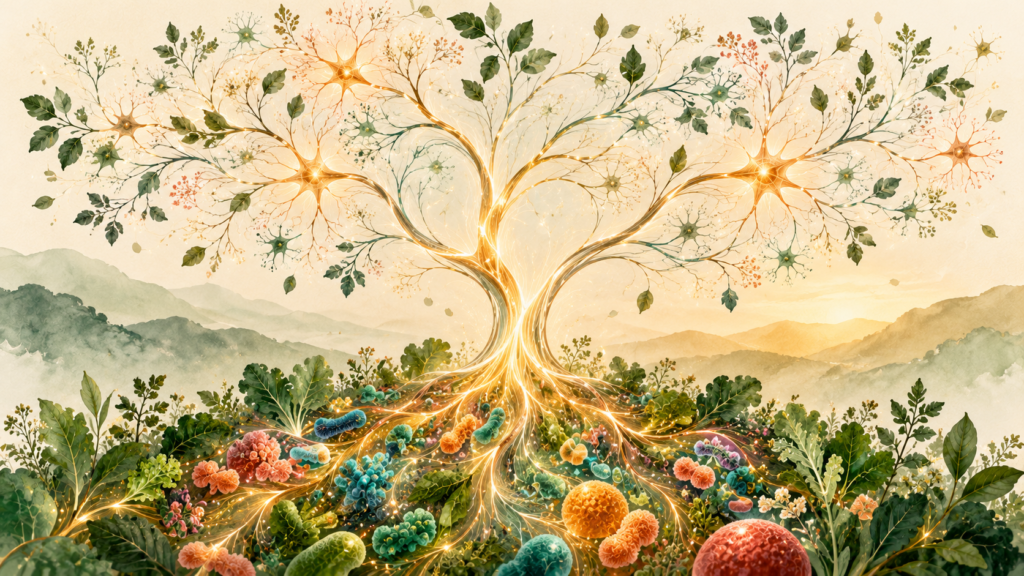
You have probably noticed it yourself. Nervousness before a big presentation turns into butterflies, or worse. A stressful week brings stomach trouble. A heavy meal leaves you feeling sluggish and low. We talk about “gut feelings” and “having the stomach for something,” and most of us accept that the belly and the mind are somehow connected.
Over the past two decades, science has begun to explain why. Researchers have found that the trillions of microbes living in the digestive tract, collectively known as the gut microbiome, communicate with the brain through nerves, hormones, immune signals, and chemicals the microbes make themselves. This two-way network is called the gut-brain axis, and it is now one of the most active areas of research in mental health.
The excitement is justified, but so is caution. Headlines promise that a probiotic can cure depression or that fixing your gut will fix your anxiety. The reality is more modest and more interesting. This guide explains how the gut and brain talk to each other, what the research shows about anxiety, depression, and stress, what remains uncertain, and what you can realistically do to support both your gut and your mental health, including when therapy is the right next step.
What Is the Gut Microbiome?
The gut microbiome is the community of microorganisms that live in your digestive tract, mostly in the large intestine. It includes bacteria, along with viruses, fungi, and other microbes. Estimates suggest the human gut hosts on the order of 100 trillion microbes, and their combined genetic material far outnumbers our own.
These microbes are not passengers. They help digest food and produce vitamins, train the immune system, protect the gut lining, and make a wide range of chemicals that affect the rest of the body, including the brain.
A healthy microbiome is generally considered to be diverse, meaning it has many different types of microbes, and balanced, with beneficial species outnumbering harmful ones. Dysbiosis is the term for an imbalance, such as lower diversity or an overgrowth of potentially harmful organisms. Dysbiosis has been linked to many health conditions, including inflammatory bowel disease, obesity, and, more recently, mood and anxiety disorders.
Your microbiome is shaped by many factors:
- Early life, including mode of birth, breastfeeding, and early antibiotics.
- Diet, which is among the most powerful influences.
- Medications, especially antibiotics.
- Stress and sleep.
- Physical activity.
- Environment and geography.
- Age and genetics.
What Is the Gut-Brain Axis?
The gut-brain axis is the two-way communication system linking the digestive tract and the central nervous system. When the microbiome is included, researchers often refer to it as the microbiota-gut-brain axis. Communication runs in both directions: the brain affects the gut, and the gut affects the brain.
This idea is not entirely new. In the early nineteenth century, the physician William Beaumont studied a patient with an opening to his stomach and noticed that emotions changed the pace of digestion, an early hint that the brain influences the gut. What is new is the discovery that gut microbes are active participants in the conversation.
How the gut and brain communicate
Researchers have identified several overlapping pathways.
1. The vagus nerve. The vagus nerve is a long nerve running from the brainstem to the abdomen. It carries signals in both directions, and most of its fibers carry information from the gut to the brain. Studies in animals suggest that some beneficial bacteria influence mood-related behavior through the vagus nerve, since cutting the nerve can block their effects.
2. The enteric nervous system. The gut has its own extensive network of neurons, sometimes called the “second brain.” It controls digestion and communicates with the brain.
3. Neurotransmitters and neuroactive chemicals. Gut cells and microbes produce or influence many of the same chemicals brain cells use to communicate, including serotonin, GABA, and dopamine. A frequently cited figure is that about 90 percent of the body’s serotonin is made in the gut. It is important to understand that gut serotonin does not directly cross into the brain in large amounts, so this statistic does not mean that your gut controls your brain’s serotonin. Still, gut-derived signals, and gut microbes’ influence on tryptophan (the building block for serotonin), appear to affect brain chemistry and mood indirectly.
4. Short-chain fatty acids (SCFAs). When gut bacteria ferment dietary fiber, they produce compounds such as butyrate, propionate, and acetate. SCFAs help maintain the gut barrier, reduce inflammation, and appear to influence brain function, including mood regulation and cognition.
5. The immune system and inflammation. Much of the immune system lives in or near the gut. Microbes shape immune signaling, and an unbalanced microbiome or a leaky gut barrier can promote low-grade inflammation. Inflammatory chemicals called cytokines can reach the brain and affect mood, energy, and motivation. Inflammation has been linked to depression in many studies.
6. The stress system (the HPA axis). The hypothalamic-pituitary-adrenal axis governs your stress response and cortisol release. Research suggests the microbiome helps regulate this system, and that chronic stress and elevated cortisol, in turn, can change the gut environment, creating a loop in which stress and gut imbalance reinforce each other.
7. Microbial metabolites. Gut microbes also produce other chemicals that enter the bloodstream and may influence the brain, including some linked to tryptophan breakdown and inflammation.
Together, these pathways form a continuous conversation. That is why scientists increasingly view the gut and brain as parts of one system.
What the Research Shows: Gut Microbiome and Mental Health
Depression
Several lines of evidence link the gut microbiome to depression:
- Differences in microbial composition. Studies comparing people with and without depression have found differences in certain bacterial groups. A study published in Nature Communications, discussed by UCLA Health, reported links between the presence or absence of particular gut bacteria and symptoms of depression, with some bacteria in overabundance associated with depression.
- Reduced diversity and butyrate-producing bacteria. Some research finds lower levels of bacteria that produce butyrate and other SCFAs in people with depression.
- Inflammation. Dysbiosis may promote inflammation that affects mood circuits.
- Animal studies. Transferring gut bacteria from depressed humans into germ-free or antibiotic-treated rodents has been reported to produce depression-like behavior in the animals, which supports a causal role in animals, though it does not prove the same in humans.
An important caution: most human studies are observational. They show correlation, not causation. Depression changes eating, sleep, activity, and medication use, all of which affect the microbiome, so it can be hard to tell which came first. Researchers believe the relationship is bidirectional: depression may alter the gut, and gut changes may contribute to depression.
Anxiety and stress
- Stress changes the microbiome. Psychological stress is associated with changes in gut bacteria and gut permeability.
- The microbiome shapes stress responses. Animal studies show that mice raised without microbes have exaggerated stress responses, which can be partly normalized by introducing certain bacteria early in life.
- Anxiety and gut conditions often go together. Rates of anxiety and depression are disproportionately high among people with functional gut disorders such as irritable bowel syndrome (IBS). Researchers think this reflects the shared communication system as well as the experience of living with chronic symptoms.
- Small human studies of probiotics show mixed results. More on this below.
Cognition, brain development, and other conditions
Beyond mood, the gut microbiome has been studied in relation to neurodevelopment, autism, Parkinson’s disease, Alzheimer’s disease, schizophrenia, and eating disorders. Early-life microbiome development appears to matter for brain development, although research in humans is still emerging. These links are even less settled than the evidence for depression and anxiety, and they should be treated as active areas of study rather than established treatments.
Trauma and early adversity
Chronic stress and early adversity can alter both stress physiology and gut function. Many people with histories of trauma report digestive problems such as IBS-type symptoms, and research increasingly explores the connection between adverse childhood experiences, gut health, and mood. This overlap is one reason a whole-person approach to treatment makes sense.
What We Don’t Know: Separating Evidence From Hype
The gut-brain field is exciting, but it is still young. Honest limits include:
- Correlation versus causation. Most human findings are associations.
- Inconsistent results. Different studies find different bacteria linked to depression, partly because of differences in methods, diet, geography, and medications.
- Small studies. Many probiotic trials are small, short, and use different strains and doses, which makes comparison hard.
- A “normal” microbiome is not defined. Healthy microbiomes vary enormously between people, so consumer microbiome tests that claim to diagnose mood problems are not reliable.
- Animal results do not always transfer. Mouse studies generate hypotheses, but humans are far more complex.
- Probiotics are not approved to treat mental health conditions. In the United States, probiotics are generally sold as supplements, and none is approved by the FDA to treat depression or anxiety.
Harvard Health reviewed the evidence on probiotics for anxiety and depression and concluded the results were mixed, with some studies suggesting mild benefits and others showing none, and that at present there were no compelling data showing a true benefit. It also noted that probiotics are probably not a substitute for standard care such as cognitive behavioral therapy or approved medications. More recent systematic reviews are somewhat more encouraging, with one review in Brain and Behavior reporting that probiotics improved depressive symptoms in about 54 percent of the selected studies and anxiety symptoms in about 44 percent, but those same reviews stress that the evidence base is heterogeneous and that more rigorous research is needed.
A fair summary: the gut microbiome is a legitimate and promising piece of the mental health puzzle, but it is one piece, and gut-focused strategies should complement, not replace, established treatment.
Probiotics, Prebiotics, and “Psychobiotics”
Probiotics are live microorganisms that may provide a health benefit when taken in adequate amounts. Common types include Lactobacillus and Bifidobacterium. Prebiotics are fibers and other compounds that feed beneficial bacteria. Synbiotics combine both. Psychobiotics is a term researchers use for probiotics or prebiotics that might benefit mental health.
What can we say?
- Some trials have found modest improvements in depressive or anxiety symptoms with particular strains, especially as an add-on to standard treatment, but results are inconsistent.
- Effects, when seen, tend to be small to moderate, and they are strain-specific. A product that works in one study may not match what is on the shelf.
- Probiotics are generally considered safe for healthy people, but they may be risky for people who are severely immunocompromised or critically ill. Talk with your doctor.
- Probiotics should not replace therapy or medication, and you should not stop any prescribed medication without medical advice.
If you decide to try one, consider asking your doctor or pharmacist which product has research behind it, give it several weeks, and track how you feel. Be wary of products making dramatic mental health claims.
Food and Mental Health: What Diet Can and Cannot Do
Diet is the most accessible lever for influencing the gut, and it also affects brain health through other pathways, including inflammation, blood sugar, and nutrient supply.
The Mediterranean-style diet and the SMILES trial
One of the best-known studies is the SMILES trial, a randomized controlled trial published in 2017 by Felice Jacka and colleagues. It tested a modified Mediterranean diet as a treatment for people with moderate to severe depression who were also receiving usual care. After 12 weeks, about 32 percent of the diet group achieved remission, compared with about 8 percent of the social support control group. The study was relatively small and did not specifically measure the microbiome, so it cannot prove the effect came through gut bacteria, but it is among the strongest pieces of evidence that diet can matter for depression.
Fiber and plant diversity
Fiber feeds the bacteria that produce SCFAs. A diet rich in vegetables, fruits, legumes, whole grains, nuts, and seeds supports microbial diversity. Some researchers suggest aiming for a wide variety of plant foods across the week, not just large amounts of a few.
Fermented foods
A small 2021 Stanford study published in the journal Cell found that people who ate more fermented foods such as yogurt, kefir, kimchi, sauerkraut, and kombucha for ten weeks showed increased microbiome diversity and reduced markers of inflammation. The study was small and short, and it did not measure mood, but it suggests fermented foods may support a healthier gut environment.
Ultra-processed foods, sugar, and alcohol
Diets high in ultra-processed foods and added sugar are associated with worse mental health outcomes in many studies, and they appear to reduce microbial diversity. Heavy alcohol use can damage the gut lining and disrupt both the microbiome and sleep. These associations do not mean you must eat perfectly. They suggest the overall pattern matters more than any single food.
A practical food list
| Goal | Examples |
| Fiber and prebiotics | Oats, beans, lentils, chickpeas, onions, garlic, leeks, asparagus, bananas, apples, whole grains |
| Fermented foods | Plain yogurt with live cultures, kefir, sauerkraut, kimchi, miso, tempeh, kombucha |
| Anti-inflammatory fats | Olive oil, fatty fish like salmon, nuts, seeds, avocado |
| Polyphenol-rich foods | Berries, dark leafy greens, colorful vegetables, green tea, dark chocolate in moderation |
| Foods to reduce | Ultra-processed snacks, sugary drinks, excess alcohol |
Eating well in Colorado
Colorado makes some of this easier. Farmers markets along the Front Range offer seasonal produce, from Palisade peaches and Rocky Ford melons in late summer to winter squash and root vegetables, and many regional growers and grocers carry local yogurt, kefir, and fermented products. Hardy winter options such as beans, lentils, root vegetables, and sauerkraut fit the seasons well. At altitude, hydration and regular meals also matter for energy and mood.
A word of caution about food and mental health
Food rules can become a source of anxiety. If you notice rigid rules about eating, preoccupation with “clean” foods, intense guilt about eating, or restricting, binging, or purging, these may be signs of disordered eating, and a strict gut-health plan could make things worse. Please speak with a doctor or therapist before making major dietary changes. This article offers general education and is not individual nutrition advice.
Stress, Sleep, Movement, and the Gut
Because the gut-brain axis is two-way, lifestyle habits that calm the nervous system also support the gut.
- Stress management. Chronic stress alters gut function and microbial balance. Mindfulness, breathing practices, time in nature, and therapy can reduce stress physiology. See the practice’s page on mindfulness therapy.
- Sleep. Poor sleep is associated with changes in the microbiome, and the microbiome may in turn influence sleep. Our article on sleeping arrangements and psychological well-being covers sleep and mental health in detail.
- Physical activity. Regular exercise is associated with greater microbial diversity and better mood. Colorado Springs’s trails, parks, and the foothills make year-round movement accessible.
- Social connection. Social contact may influence microbial exchange and certainly supports mood and stress regulation.
- Limiting unnecessary antibiotics. Antibiotics are sometimes essential, but they can disrupt the microbiome, so use them only when prescribed and needed. Never stop an antibiotic course early without medical advice.
- Time outdoors. Exposure to natural environments is associated with diverse microbial exposure and better mood.
Irritable Bowel Syndrome, Digestive Conditions, and Mental Health
If you have IBS, inflammatory bowel disease, chronic constipation, or other digestive conditions, the gut-brain link is not abstract. Anxiety and depression are more common in people with these conditions, and stress often triggers flare-ups. This is a two-way street: gut symptoms cause worry and low mood, and anxiety amplifies gut symptoms.
Evidence-based psychological treatments for IBS include cognitive behavioral therapy, gut-directed hypnotherapy, and mindfulness-based approaches. These do not claim that IBS is “all in your head.” They work by calming the stress response and changing how the brain processes gut signals. If you have persistent digestive symptoms, see a physician first to rule out medical causes, and then consider combining medical care with psychological support. The practice offers CBT therapy in Colorado Springs.
Trauma, the Nervous System, and the Gut
Many people with trauma histories experience gut symptoms such as nausea, cramping, urgency, or appetite changes, especially under stress. When the nervous system is stuck in a threat response, the gut often reflects it, since the vagus nerve, stress hormones, and enteric nervous system are all involved.
This is one reason therapy that works with the body and nervous system, not only thoughts, can matter. Approaches such as EMDR, somatic therapy, and mindfulness aim to settle the stress response, and some clients notice improvements in sleep, anxiety, and physical tension, including digestive symptoms, as trauma processing progresses. This is an area where clinical experience is ahead of controlled research, so it is better described as a plausible, commonly reported effect than a proven one.
If you live with both digestive symptoms and anxiety, burnout, or trauma, learn more about trauma therapy and EMDR therapy in Colorado Springs, and see our guides on what to expect in a first EMDR session and on anxiety, burnout, and seasonal depression in Colorado Springs.
Emerging Treatments and Research Frontiers
Researchers are exploring several microbiome-based approaches:
- Targeted probiotics and prebiotics for specific symptoms.
- Postbiotics, the beneficial compounds produced by microbes.
- Dietary interventions tailored to the individual.
- Fecal microbiota transplantation (FMT), which is established for recurrent C. difficile infection but remains experimental for mental health.
- Microbiome-informed precision psychiatry, using microbiome profiles to personalize treatment.
These ideas are promising, but none is a standard mental health treatment today. If you see a clinic selling microbiome therapy for depression or anxiety, ask for the evidence and talk with your own doctor first.
Who Should Pay Particular Attention to Gut Health and Mental Health?
- People with IBS, IBD, celiac disease, or chronic digestive symptoms.
- People with depression or anxiety that have not improved with standard care.
- Those who have taken repeated or long courses of antibiotics.
- People under chronic stress or experiencing burnout.
- People with a history of trauma or adverse childhood experiences.
- Those with sleep problems.
- People with diets low in fiber and high in ultra-processed foods.
Practical Steps: A Realistic Gut-and-Mood Plan
You do not need an overhaul. Small, sustainable steps are more effective than a drastic reset.
- Add before you subtract. Aim to add one extra plant food per meal, such as beans in a soup or berries on oatmeal.
- Try one fermented food. Plain yogurt, kefir, or sauerkraut a few times a week.
- Eat regular meals. Consistent timing supports blood sugar and mood.
- Move most days. A daily walk counts.
- Protect your sleep. Keep a regular schedule and a calm bedtime routine.
- Reduce alcohol and ultra-processed foods gradually.
- Build a stress-calming habit. Breathing, mindfulness, time outdoors, or therapy.
- Track what you notice. A simple mood and digestion log can reveal patterns over weeks.
- Be patient. Changes in the microbiome and mood take weeks to months.
- Check supplements with your doctor, especially if you take medication or have a medical condition.
When to See a Professional
Gut health strategies are useful, but they are not a substitute for professional care. Consider seeing a doctor or mental health professional if:
- You have persistent low mood, loss of interest, hopelessness, or anxiety that interferes with life.
- You have digestive symptoms that are severe, new, or persistent, such as blood in stool, unexplained weight loss, ongoing pain, or changes in bowel habits.
- You have a history of trauma, and your body seems stuck in alarm.
- You are using food, restriction, or supplements in a way that feels compulsive or distressing.
- You are thinking about stopping prescribed medication.
If you are in crisis or thinking about harming yourself, call or text 988, contact Colorado Crisis Services at 1-844-493-8255 or text TALK to 38255, or call 911.
Therapy and the Whole Person
Mental health is not just a gut story or a brain story. It is a story about the whole person: biology, nervous system, history, relationships, and meaning. Evidence-based therapies, including trauma-focused work and depth-oriented psychotherapy, address the roots of anxiety, depression, and burnout, while lifestyle habits such as food, sleep, and movement support the body that carries you through the work.
Safe Space Psychotherapy takes a holistic, mind-body view. The practice offers individual therapy, trauma therapy, and mindfulness therapy, with virtual sessions for Colorado residents and a free 15-minute consultation. You can review fees and insurance and learn about the practice’s approach before you begin.
If anxiety, low mood, or a body that will not settle is wearing you down, you do not have to figure it out alone. Book a free consultation or call (954) 532-8303.
Frequently Asked Questions
What is the gut-brain axis? It is the two-way communication network between the digestive system and the brain, involving nerves (especially the vagus nerve), hormones, immune signals, and chemicals produced by gut microbes.
Can gut bacteria affect mood and mental health? Research suggests they can influence mood, stress responses, and possibly depression and anxiety, but most human evidence shows association rather than proven cause.
Is it true that 90 percent of serotonin is made in the gut? Roughly 90 percent of the body’s serotonin is produced in the gut, but that serotonin mainly works locally and does not directly cross into the brain. The gut influences brain serotonin indirectly, for example through tryptophan and other signals.
Can probiotics treat depression or anxiety? Evidence is mixed. Some studies show modest benefits, others none. Probiotics are not an approved treatment for mental health conditions and should not replace therapy or medication.
What foods are best for gut and mental health? A varied, plant-rich, Mediterranean-style pattern with fiber, legumes, whole grains, fruits, vegetables, nuts, olive oil, fish, and fermented foods is the best-supported approach. The SMILES trial found a modified Mediterranean diet helped people with depression.
Can stress really cause stomach problems? Yes. Stress hormones and nerve signals affect gut movement, sensitivity, and the microbiome, which is why anxiety can cause nausea, cramping, or bowel changes.
Does anxiety come from the gut? Not simply. Anxiety has many contributors, including genetics, experiences, thought patterns, and nervous system reactivity. The gut may be one contributor for some people.
How long does it take to improve my gut microbiome? Some changes in the microbiome can appear within days of dietary change, but lasting shifts and any effect on mood usually take weeks to months.
Should I get a microbiome test? Consumer microbiome tests are not currently reliable for diagnosing or guiding treatment of mental health conditions. Speak to your doctor.
Can therapy help if my symptoms involve both my gut and my mood? Yes. CBT, gut-directed hypnotherapy, mindfulness, and trauma-focused therapy can reduce stress responses and help with both gut and mood symptoms.
Are there risks to taking probiotics? They are generally safe for healthy people but can pose risks for those who are severely ill or immunocompromised. Talk with a healthcare provider first.
Could my gut be the reason talk therapy isn’t working? It is unlikely to be the sole reason, but physical factors such as sleep, inflammation, diet, and medical conditions can affect how well you feel and respond. A whole-person evaluation is worthwhile.
Key Takeaways
- The gut microbiome communicates with the brain through the vagus nerve, immune signals, hormones, and microbial chemicals, a network called the gut-brain axis.
- Research links gut microbiome differences to depression, anxiety, and stress, but most findings are associations, and the relationship works in both directions.
- Probiotic evidence is mixed and modest. They are not a substitute for therapy or medication.
- A fiber-rich, Mediterranean-style diet with fermented foods has the best support, and the SMILES trial suggests diet can help depression.
- Stress, sleep, movement, and connection all influence the gut as well as the mind.
- Trauma, anxiety, and burnout often show up in the body, and treatment that includes the nervous system can help.
This article is for education and does not replace individual medical or mental health advice