
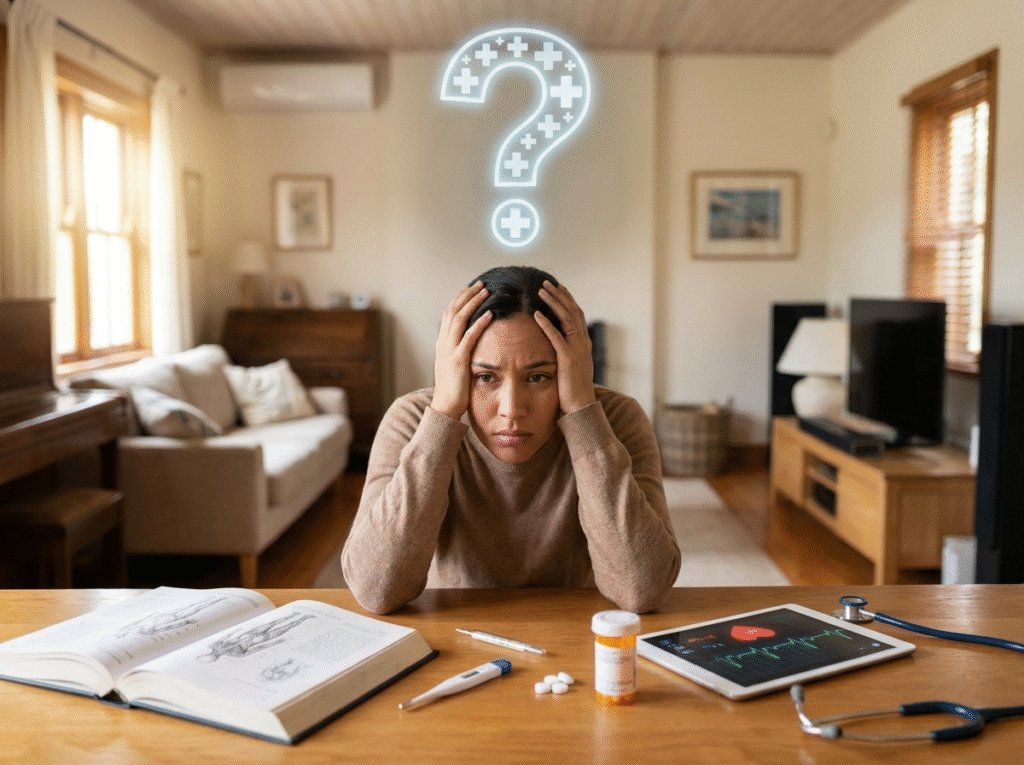
Health anxiety is a form of persistent and excessive worry about having or developing a serious illness. While it’s normal to occasionally feel concerned about your health, health anxiety goes beyond typical concern—it becomes intrusive, distressing, and difficult to control.
People experiencing health anxiety often misinterpret normal bodily sensations—like a headache, muscle twitch, or slight chest discomfort—as signs of severe disease. Even after medical reassurance, the fear may persist or quickly return, creating a cycle of worry and doubt.
Clinically, health anxiety is often associated with illness anxiety disorder, though it may also overlap with other conditions like generalized anxiety or obsessive-compulsive tendencies. Many people search for phrases like “what is health anxiety like” or “what is health anxiety symptoms” because the experience can feel confusing, intense, and isolating.
Beyond physical fears, health anxiety affects thoughts, emotions, relationships, and daily functioning. It can lead to constant monitoring of the body, repeated reassurance-seeking, and difficulty focusing on anything else.
What Is Health Anxiety Called?
Health anxiety is known by several different names, depending on context and severity:
- Health Anxiety – a general, commonly used term
- Illness Anxiety Disorder – the clinical diagnosis used in mental health settings
- Hypochondria (Hypochondriasis) – an older term, now less commonly used in clinical practice but still widely recognized
- OCD-Related Health Anxiety – in some cases, health fears are linked to obsessive-compulsive patterns
It’s important to distinguish between normal health awareness and a disorder. Being mindful of your health—like noticing symptoms and seeking medical advice when necessary—is healthy. Health anxiety, however, interferes with daily life, creates ongoing distress, and persists even when evidence suggests there is no serious illness.
What Does Health Anxiety Feel Like?
Living with health anxiety can feel overwhelming and exhausting. It often includes a constant internal dialogue centered around fear and uncertainty.
Common experiences include:
- Constant body checking
- Reassurance-seeking
- Fear after noticing normal sensations
- Catastrophic thinking
- Difficulty trusting medical reassurance
Emotionally, people may feel fear, frustration, embarrassment, and helplessness. Physically, anxiety can create very real symptoms like a racing heart, dizziness, muscle tension, or chest tightness.
This is why many ask, “Can health anxiety cause fake symptoms?” The symptoms are real—but they are caused by anxiety rather than illness.
Health anxiety is often cyclical:
- You notice a sensation
- You feel fear
- You check or research
- Anxiety increases
- The sensation feels stronger
Over time, this loop can feel like it’s taking over your life.
Health Anxiety Symptoms
Common health anxiety symptoms include:
- Excessive worry about illness
- Frequent Googling of symptoms
- Repeated doctor visits or complete avoidance
- Checking pulse, skin, or breathing
- Difficulty accepting reassurance
- Anxiety triggered by health news
- Trouble sleeping and concentrating
These symptoms often overlap with generalized anxiety, panic disorder, and OCD, which is why understanding patterns is essential for proper management.
What Causes Health Anxiety?
Health anxiety usually develops from a mix of factors rather than a single cause.
Key Contributors:
Past Experiences
Personal illness or seeing a loved one struggle with disease can leave a lasting impression.
Psychological Traits
Perfectionism, overthinking, and intolerance of uncertainty increase vulnerability.
Trauma
Medical trauma or distressing healthcare experiences can shape long-term fear.
Information Overload
Constant exposure to alarming health content fuels worry.
OCD Tendencies
Intrusive thoughts and compulsive checking can reinforce anxiety loops.
People often wonder:
- Why do I have health anxiety?
- Why is my health anxiety so bad?
- What is the root cause of health anxiety?
The answer is usually a combination of how your brain processes uncertainty, fear, and bodily sensations.
Is Health Anxiety a Mental Health Disorder?
Yes—when health anxiety significantly disrupts daily life, it is considered part of the broader category of anxiety disorders.
It may be diagnosed as:
- Illness anxiety disorder
- OCD-related anxiety
- Generalized anxiety disorder
- Panic disorder
At its core, it involves an overestimation of danger and a heightened sensitivity to bodily sensations.
How Health Anxiety Affects Daily Life
Health anxiety impacts more than just thoughts—it can shape your entire routine and quality of life.
Common effects include:
- Difficulty focusing at work
- Sleep disruption
- Avoidance of activities like exercise or travel
- Frequent medical visits
- Strained relationships due to reassurance-seeking
Over time, this creates emotional exhaustion and reduces overall wellbeing.
How to Stop Health Anxiety
Stopping health anxiety doesn’t mean eliminating all worry—it means changing your response to it.
Practical Strategies:
- Limit symptom Googling
- Reduce checking behaviors
- Practice tolerance for uncertainty
- Use grounding techniques
- Delay reassurance-seeking
These habits help break the cycle rather than reinforce it.
Best Treatments for Health Anxiety
Effective treatment options include:
Cognitive Behavioral Therapy (CBT)
Helps change unhelpful thought patterns and behaviors.
Exposure and Response Prevention (ERP)
Particularly effective for OCD-related health anxiety.
Health Anxiety Counseling
Provides structured support and deeper understanding.
Medication
May be used when anxiety or depression is severe.
Mindfulness-Based Therapy
Encourages non-judgmental awareness of thoughts.
CBT for Health Anxiety
CBT is widely considered the most effective treatment for health anxiety.
It helps by:
- Challenging catastrophic thinking
- Reducing reassurance-seeking
- Reframing interpretations of symptoms
- Building confidence in uncertainty
Example:
A person feels chest tightness and immediately fears a serious condition. Through CBT, they learn to pause, consider alternative explanations (like anxiety), and use calming techniques before reacting.
Other Ways to Manage Health Anxiety
Supportive tools include:
- Meditation for health anxiety
- Breathing exercises
- Journaling
- Sleep improvement
- Limiting social media exposure
- Regular physical activity
These methods support nervous system regulation and emotional balance.
How to Cope With Health Anxiety in the Moment
When anxiety spikes, try:
- Pause and name the fear
- Avoid Googling symptoms
- Focus on evidence, not assumptions
- Use grounding techniques
- Reach out for support without over-relying on reassurance
The goal is to reduce panic and regain control.
How to Help Someone With Health Anxiety
Do:
- Listen with empathy
- Validate their emotions
- Encourage professional help
Don’t:
- Dismiss their fears
- Provide constant reassurance
- Criticize or mock
Support is most helpful when it balances compassion with healthy boundaries.
Health Anxiety Support and Resources
Helpful support options include:
- Therapy and counseling
- Support groups
- Online mental health communities
- Collaboration with healthcare providers
These resources reduce isolation and provide structured recovery paths.
Books, Apps, and Self-Help Tools
Self-help tools can complement therapy:
- CBT workbooks
- Guided meditation apps
- Anxiety trackers
- Educational resources
They empower individuals to actively manage their symptoms.
Special Topics and Related Searches
Many people explore topics like:
- “How I cured my health anxiety”
- “Health anxiety is ruining my life”
While these stories can offer hope, recovery is personal and varies for each individual. What matters most is finding strategies that work for you.
When to Seek Professional Help
Seek support if:
- Anxiety interferes with daily life
- Panic becomes frequent
- Reassurance-seeking feels uncontrollable
- You avoid medical care
- You feel overwhelmed or hopeless
Professional help can provide clarity, structure, and effective tools for recovery.
Conclusion: Recovery Is Possible
Health anxiety is common, real, and treatable. It’s not a personal flaw—it’s a pattern your mind has learned, and it can be unlearned.
With the right approach—such as CBT, reducing checking behaviors, and building tolerance for uncertainty—you can regain a sense of calm and trust in your body.
Recovery doesn’t mean eliminating anxiety completely. It means no longer being controlled by it.
Take the Next Step with Safe Space Wellness
If you’re struggling with constant worry about your health, you don’t have to face it alone. Safe Space Wellness is designed to support you with compassionate, practical, and judgment-free guidance.
At Safe Space Wellness, you’ll find:
- Expert-backed insights on managing health anxiety
- Tools and techniques to calm your mind and body
- A supportive environment where your experiences are understood
Start building a healthier relationship with your thoughts and your body—at your own pace, in your own safe space.
Frequently Asked Questions (FAQs)
What is health anxiety?
Health anxiety is an excessive and persistent fear of having or developing a serious illness, often despite medical reassurance.
What is health anxiety like?
It involves constant worry, body checking, reassurance-seeking, and difficulty trusting that you are healthy.
What is the root cause of health anxiety?
There is no single cause. It typically involves a mix of past experiences, anxiety traits, trauma, and sensitivity to uncertainty.
Can health anxiety cause real physical symptoms?
Yes. Anxiety can produce symptoms like chest tightness, dizziness, and rapid heartbeat, which feel very real.
What is the best treatment for health anxiety?
Cognitive Behavioral Therapy (CBT) is considered the most effective treatment, often combined with mindfulness and, in some cases, medication.
How do I stop health anxiety?
Focus on reducing checking behaviors, limiting symptom research, practicing grounding techniques, and building tolerance for uncertainty.
How do I help someone with health anxiety?
Offer empathy, avoid excessive reassurance, and encourage them to seek professional support when needed.