
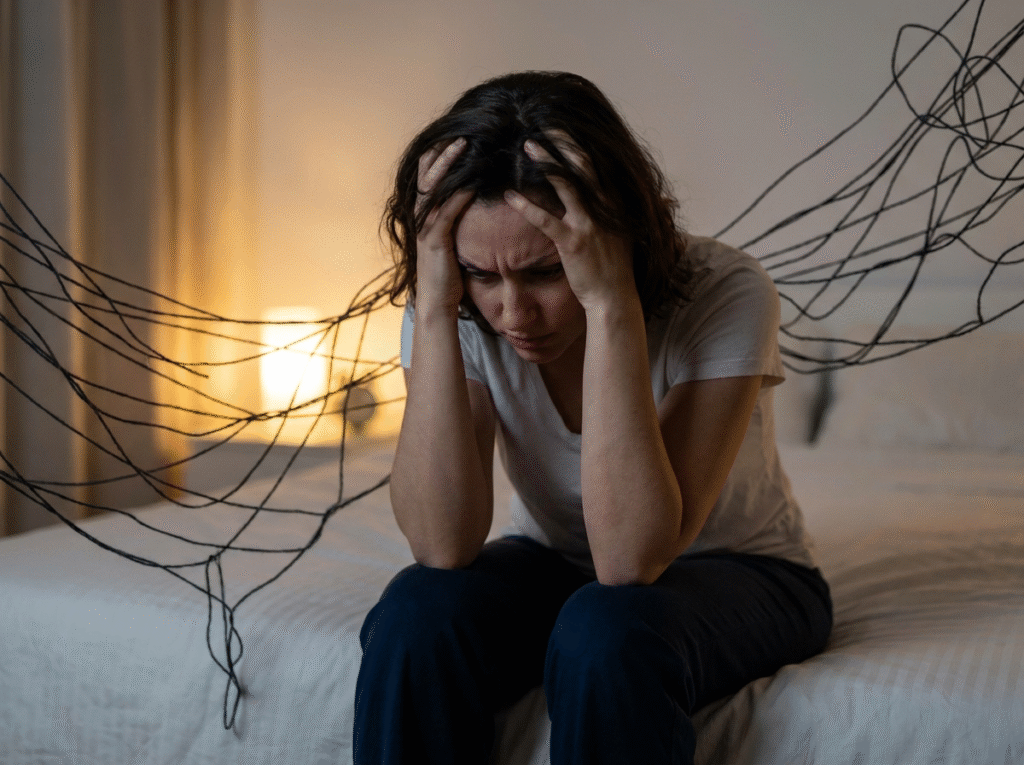
For something that’s often portrayed as natural, effortless, and deeply pleasurable, sex can feel surprisingly stressful. Many people quietly struggle with a sense of pressure, worry, or even dread when it comes to intimacy. Instead of connection, there’s overthinking. Instead of pleasure, there’s performance.
At the heart of this experience is a fundamental biological conflict: your body cannot be in two states at once. Sexual arousal thrives in the parasympathetic nervous system—often called the “rest and digest” mode. Anxiety, on the other hand, activates the sympathetic nervous system, your body’s “fight or flight” response. When stress takes over, your body prepares for danger—not intimacy.
This creates what many describe as a mental block during sex—a disconnect between what you want to feel and what your body allows. The good news is that sexual anxiety is not a personal failure. It’s a common and manageable psychological and physiological response. By understanding how it works, you can begin to shift from pressure to presence, and from stress to connection.
Deconstructing the Stress Cycle: Why It Happens
The “Spectatoring” Effect
One of the biggest drivers of sexual anxiety is something psychologists call spectatoring, essentially watching yourself instead of experiencing the moment.
Instead of being immersed in touch, sensation, and connection, your mind starts asking questions like:
- “Am I doing this right?”
- “Do I look okay?”
- “Am I taking too long?”
- “What if I fail?”
This self-monitoring pulls you out of your body and into your head. The more you analyze, the less you feel—and the harder it becomes to stay aroused or present.
The Physiology of Anxiety and Arousal
Sexual arousal requires relaxation, blood flow, and openness. Anxiety disrupts all three.
When stress hormones like adrenaline and cortisol are released:
- Blood flow is redirected away from the sexual organs
- Muscles tense up instead of relaxing
- Natural lubrication or erection becomes more difficult
- Breathing becomes shallow and rapid
In simple terms, your body prioritizes survival over pleasure.
The Anxiety Loop
Sexual anxiety often becomes a self-reinforcing cycle:
- A small worry appears (“What if I go soft?”)
- Anxiety increases
- Physical response is affected (e.g., erection loss or dryness)
- The fear feels confirmed
- Anxiety intensifies in future encounters
Over time, even the anticipation of intimacy can trigger stress.
Common Root Causes
Understanding the “why” behind sexual anxiety is key to addressing it. Common factors include:
Past Experiences or Trauma
Negative or uncomfortable sexual experiences can leave lasting emotional imprints.
Body Image Concerns
Comparisons to unrealistic media standards can create insecurity and self-consciousness.
Relationship Dynamics
Lack of communication, unresolved tension, or emotional distance can heighten pressure.
Cultural or Social Conditioning
Messages about performance, gender roles, or expectations can distort how sex is experienced.
Navigating Performance Anxiety and Dysfunction
What Is Performance Anxiety?
Performance anxiety is the fear of not meeting perceived expectations during sex. It shifts focus from connection to outcome—turning intimacy into a test rather than an experience.
Male-Specific Challenges
Men often experience performance anxiety in the form of:
- Fear of “going soft”
- Worry about lasting long enough
- Pressure to initiate or lead
This can lead to performance anxiety-related erectile difficulties, which are often psychological rather than physical. The irony is that the more you try to control the outcome, the less control you feel.
Female-Specific Challenges
For women, stress often impacts:
- Natural lubrication
- Ability to relax into arousal
- Orgasm responsiveness
Because arousal is closely tied to emotional safety and relaxation, anxiety can create a disconnect between desire and physical response.
Feeling “Shy” or Nervous
It’s completely normal to feel anxious:
- In a new relationship
- After a long break from intimacy
- When rebuilding confidence
These feelings don’t indicate a problem—they indicate unfamiliarity. Like any meaningful experience, intimacy can take time to feel natural again.
How to Relax Before and During Sex
Mindful Preparation
Relaxation starts before intimacy begins. Simple breathing exercises can help shift your nervous system.
Try box breathing:
- Inhale for 4 seconds
- Hold for 4 seconds
- Exhale for 4 seconds
- Hold for 4 seconds
Repeat for a few minutes to calm your body and mind.
Sensory Grounding
Instead of focusing on performance, shift your attention to sensation:
- The warmth of touch
- The rhythm of breathing
- The scent or sound in the room
This anchors you in the present moment and reduces mental chatter.
Does Masturbation Before Sex Help?
It depends on the individual.
Potential benefits:
- Reduces pressure to perform
- Helps manage arousal levels
Potential downsides:
- May reduce sensitivity or energy
- Can reinforce solo patterns that differ from partnered intimacy
The key is awareness—understanding what works best for your body.
Using Gentle Distractions
Soft music, ambient sounds, or dim lighting can create a relaxed environment. These elements help reduce self-consciousness and make the experience feel less like a performance.
Clinical Strategies: How to Overcome Sexual Anxiety
Reframing Sexual Mindfulness
Shift your mindset from:
- “Did I perform well?”
to - “Did I feel connected?”
Pleasure is not a goal to achieve—it’s an experience to allow.
Communication as Therapy
Talking openly with your partner can significantly reduce anxiety.
You might say:
- “Sometimes I get in my head, and it makes things harder for me to relax.”
- “I want us to focus more on enjoying the moment than on outcomes.”
Honesty removes the burden of secrecy.
Breaking the Loop
Low-Pressure Intimacy
Focus on non-penetrative touch, cuddling, or exploration without expectations.
Delaying Performance Goals
Take orgasm off the table temporarily. This reduces pressure and allows natural arousal to return.
Gradual Exposure
Rebuild comfort slowly rather than forcing high-pressure situations.
When to Seek Professional Help
If sexual anxiety feels persistent or overwhelming, working with a therapist—especially one trained in sex therapy—can be highly effective. They can help address deeper emotional patterns, trauma, or relationship concerns.
Lifestyle, Stress, and Sexuality
The “Sex Helps Anxiety” Paradox
Sex can reduce stress by releasing feel-good chemicals like oxytocin and endorphins. However, when you’re already anxious, reaching that relaxed state can feel difficult.
The solution lies in lowering baseline stress—not forcing intimacy.
Physical Health and Confidence
Regular exercise:
- Improves blood flow and stamina
- Enhances body image
- Reduces stress hormones
Even moderate activity can have a noticeable impact on sexual wellbeing.
Managing Stress Outside the Bedroom
Your sex life doesn’t exist in isolation. Work stress, sleep deprivation, and emotional overload all affect intimacy.
Prioritizing:
- Rest
- Boundaries
- Emotional balance
can indirectly transform your sexual experiences.
FAQ: Quick Answers for Your Intimate Life
How long do guys normally last in bed?
There’s no universal “normal.” Studies suggest a wide range, but focusing on duration often increases anxiety. Satisfaction is more about connection than timing.
Can sex help with anxiety?
Yes. Healthy intimacy can reduce stress through emotional bonding and neurochemical release—but only when it feels safe and pressure-free.
How do I stop thinking during sex?
You don’t stop thoughts—you redirect attention. Focus on physical sensations, breathing, and connection rather than trying to “clear” your mind.
Why don’t I enjoy sex?
Lack of enjoyment can stem from anxiety, emotional disconnect, past experiences, or unmet needs. Exploring these factors is key to change.
How do I stop tensing up during orgasm?
Practice progressive muscle relaxation and deep breathing. Learning to release tension gradually can improve comfort and responsiveness.
What are the signs of sexual tension in men?
Increased focus, physical arousal, restlessness, or heightened sensitivity are all natural biological responses—not signs of dysfunction.
Conclusion: Reclaiming Pleasure Without Pressure
Sexual stress is not a defect—it’s a signal. Your body is asking for safety, presence, and connection. When anxiety takes over, it’s not because something is wrong with you, but because your nervous system is trying to protect you.
The shift from performance to presence doesn’t happen overnight. It’s built through small, intentional changes:
- Letting go of unrealistic expectations
- Communicating openly
- Focusing on sensation rather than outcomes
Over time, these changes can transform intimacy from something you “perform” into something you truly experience.
Take the First Step with Safe Space Wellness
If you’re ready to move beyond sexual anxiety and build a healthier, more connected relationship with intimacy, Safe Space Wellness is here to support you.
Our platform is designed to provide:
- Thoughtful, judgment-free guidance
- Practical tools for emotional and sexual wellbeing
- A safe environment to explore your experiences at your own pace
Start your journey toward confidence, connection, and calm—because intimacy should feel like a safe space, not a stressful one.