
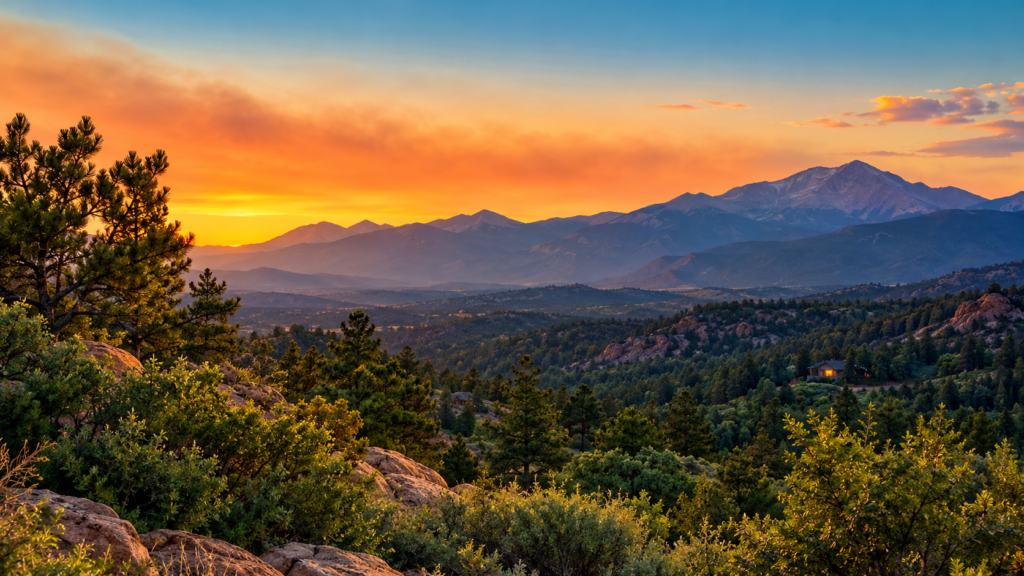
If you live along the Front Range, a red-orange sky in July or a gust of wind on a dry March afternoon can do something to your body before your mind has time to weigh in. Your heart picks up. Your stomach drops. You check the air quality app, then the evacuation map, then the window. For many Colorado Springs residents, that reaction is not an overreaction. It is memory, and it is stored in the nervous system.
Colorado Springs knows wildfire better than most American cities. The Waldo Canyon Fire in June 2012 forced tens of thousands of people out of their homes and destroyed hundreds of houses on the west side of the city. The Black Forest Fire a year later burned roughly 500 homes north of town and took two lives. Further north, the Marshall Fire of December 30, 2021 became the most destructive fire in Colorado history by property loss, with nearly 1,100 homes lost in Boulder County in a matter of hours. Each of these events left a trail of people who survived physically but are still carrying the experience.
This guide explains what wildfire trauma looks like, why it can linger long after the smoke clears, and how EMDR (Eye Movement Desensitization and Reprocessing) therapy helps survivors process what happened so it no longer feels like it is happening now. It is written for Colorado Springs and Front Range residents, for people who evacuated, people who lost homes, people who simply watched the ridge glow from their driveway, and for the family members and first responders who love and work alongside them.
What Wildfire Trauma Actually Looks Like
Wildfire is a particular kind of disaster. It arrives with warning in some cases and none in others. It is visible for miles. It forces fast, high-stakes decisions: which pets, which photographs, which road. It often ends with an open-ended wait to learn whether your home still stands. That mix of threat, uncertainty, and loss is exactly what the human stress response is built to react to, and it is why so many survivors develop symptoms afterward.
Clinicians who work with disaster survivors commonly see the following patterns.
- Intrusive memories and flashbacks. The sound of wind, the smell of smoke, or a sunset with an orange cast can pull you back into the evacuation as if it were happening now.
- Hypervigilance. Checking the sky, refreshing fire maps, sleeping with a go-bag by the door, or feeling on edge on every red flag warning day.
- Sleep disruption and nightmares. Waking at 2 or 3 a.m. with your heart racing, or being unable to settle until you have scanned the house and yard.
- Avoidance. Steering around the burn scar, declining invitations to hike, or not being able to look at photographs of the lost home.
- Anxiety and panic. Sudden surges of dread when the wind picks up, when a siren sounds, or when someone mentions fire season.
- Depression and grief. Mourning a house, a neighborhood, a pet, a landscape, a sense of safety. Grief after disaster is real grief, even when no one died.
- Guilt and shame. “I should have left sooner.” “I should have saved more.” “Other people lost so much more than I did, so why am I struggling?”
- Irritability and relationship strain. Insurance negotiations, temporary housing, rebuilding decisions, and shared exhaustion can strain even strong relationships.
- Physical symptoms. Headaches, stomach trouble, muscle tension, and fatigue that have no obvious medical cause.
None of these mean you are weak or broken. They are how a healthy nervous system responds to real danger. The difficulty comes when the alarm system stays switched on after the danger has passed.
Why Some People Recover, and Others Stay Stuck
Most people who live through a disaster experience distress in the first days and weeks, and most recover with time, rest, and support. A smaller group go on to develop post-traumatic stress disorder (PTSD), prolonged grief, depression, or an anxiety disorder. Research on wildfire survivors has found elevated rates of these conditions in affected communities, though the exact figures vary widely from study to study depending on how close people were to the fire, how much they lost, and how long afterward they were assessed.
Several factors raise the odds that distress will linger:
- Direct exposure, such as a rapid, unplanned evacuation or being trapped.
- Loss of a home, a pet, or a loved one.
- Ongoing disruption such as displacement, insurance disputes, and rebuilding delays.
- A history of earlier trauma, which can make a new event land harder.
- Limited social support or financial strain.
- Repeated exposure, such as living through more than one fire season in the same landscape.
That last point matters in Colorado. The Marshall Fire community, for example, was hit by windy days and smaller brush fires in the years afterward, and local mental health organizations noted that each windy day could reawaken survivors’ distress. Mental Health Partners in Boulder County has also written about the “anniversary effect,” in which survivors may experience days or weeks of heightened anxiety, anger, grief, nightmares or flashbacks around the date of the disaster. If late June or late December has become a hard stretch for you, that pattern is common and treatable.
Why Talk Alone Doesn’t Always Reach It
Many survivors say some version of the same thing: “I understand what happened. I know I’m safe now. My body doesn’t believe it.”
This gap makes sense. Traumatic memories are not stored like ordinary ones. During a threat, the brain prioritizes survival over storytelling, and the memory can be encoded in fragments: images, sounds, smells, body sensations, and raw emotion, without a clear sense of “this was then, not now.” Later, a trigger such as smoke or wind can activate the fragment, and the nervous system reacts as if the fire were on the ridge again.
Talking about the experience can help, and good support from friends, family, and community is protective. But insight alone often does not shift the way the memory is stored. That is one reason clinicians have turned to approaches that work directly with the memory and the body’s response, and why EMDR has become one of the most widely used treatments for trauma.
What Is EMDR Therapy?
EMDR therapy was developed by psychologist Francine Shapiro, who published her first clinical report in 1989. It has since become one of the most researched treatments for PTSD. The World Health Organization recommends trauma-focused therapies, including EMDR, for PTSD, and EMDR is also supported by major clinical practice guidelines in the United States, including those used by the VA and Department of Defense.
EMDR is built on a model called adaptive information processing. The idea is that the brain has a natural system for digesting experiences and filing them away as past events. After overwhelming events, that system can get stuck, leaving the memory raw and easily triggered. EMDR helps restart the process.
During the reprocessing phase, you hold a specific memory in mind, along with the thoughts, emotions, and body sensations attached to it, while your therapist guides bilateral stimulation: back-and-forth eye movements, alternating taps, or alternating tones. In short sets, you notice what comes up. You are not asked to retell the story in detail. Over the course of treatment, the memory typically becomes less vivid and less emotionally charged. You still remember what happened. It just stops feeling like it is happening now.
If you want a plain-language walkthrough of the process, the practice’s page on EMDR therapy in Colorado Springs covers how the work is structured, and our guide to what to expect in your first EMDR session explains what the early appointments look like.
How EMDR Helps Wildfire Survivors Specifically
Wildfire trauma has features that make EMDR a natural fit.
It targets the sensory memory. Wildfire memories are intensely sensory: the color of the sky, the roar of wind, the smell of smoke, the sound of a neighbor’s car horn. EMDR works with those sensory and emotional fragments directly, which can reduce how strongly smoke, wind, or orange light trigger you today.
It doesn’t require you to narrate everything. Many survivors are exhausted from telling their evacuation story to insurance adjusters, relatives, and reporters. EMDR does not ask you to retell the whole thing in detail, which can feel like a relief.
It addresses guilt and self-blame. In EMDR, therapists help you identify the negative belief attached to a memory, such as “I should have done more” or “I’m not safe,” and work toward a more adaptive belief, such as “I did the best I could with the information I had” or “I’m safe now.” That shift is often where survivors’ guilt begins to ease.
It can focus on the present and the future too. EMDR uses a three-pronged approach: past memories, present triggers, and future situations. For a wildfire survivor, that can mean processing the evacuation memory, then working on the red flag warning day that still sets off your alarm, and then rehearsing how you want to respond the next time fire season arrives.
It can work with several kinds of loss. EMDR is not only for the frightening moments. Survivors can also process grief over a lost home or pet, the stress of displacement, or the helplessness of waiting for news. For loss-specific work, the practice also offers grief counseling for Colorado Springs residents.
EMDR After Disasters: What the Evidence and Field Experience Show
EMDR has a long history in disaster response. EMDR Humanitarian Assistance Programs (HAP) coordinates a Trauma Recovery Network of volunteer EMDR therapists who provide pro bono EMDR after disasters in dozens of countries. After the Marshall Fire, Jewish Family Service of Boulder County and the Community Foundation of Boulder County offered free 90-minute group EMDR sessions for wildfire survivors, using a protocol in which participants draw or write while practicing bilateral tapping, without being asked to share their stories aloud. Local reporting from KGNU also captured a Marshall Fire survivor describing how EMDR helped her work through the loss of her home and her cat.
The research base for EMDR with PTSD is substantial, including randomized controlled trials and meta-analyses. A 2014 meta-analysis of randomized trials by Chen and colleagues found significant reductions in PTSD symptoms with EMDR. Evidence specific to wildfire survivors is still smaller and less developed than evidence for other trauma types, so it is more accurate to say EMDR is well supported for PTSD and trauma-related distress in general, and widely used after disasters, than to promise a specific result for any one person.
EMDR Is Not Right for Everyone Right Away
Good EMDR therapy is paced to your readiness. A few situations call for extra preparation or a different starting point:
- You are still in the middle of the crisis. If you are currently displaced, in unstable housing, or still in survival mode, the first work may focus on stabilization, basic safety, and coping skills before any memory processing.
- You have limited coping skills for intense emotion. Thorough preparation (see phase 2 below) teaches grounding tools first.
- You experience significant dissociation. A therapist trained in EMDR will adapt the approach and move more slowly.
- You have certain medical or substance use concerns. A thorough intake covers these.
If you need a faster form of support in the immediate aftermath of a fire, some communities offer crisis counseling, group sessions, and peer support first, and individual EMDR can follow when you are ready.
The Eight Phases of EMDR, Explained for Wildfire Survivors
EMDR follows a structured eight-phase protocol. Here is how it can look for someone processing a wildfire.
- History and treatment planning. Your therapist learns about your life, your symptoms, and the events you want to work on. For a wildfire survivor, that may include the evacuation, the aftermath, and any earlier experiences that make the current distress heavier.
- Preparation. You learn grounding and calming skills such as a “safe place” or “calm place” exercise, paced breathing, and tools for stepping back if things feel too intense. This phase is not rushed.
- Assessment. You and your therapist choose a target memory, such as the moment you saw flames or the drive down the evacuation route. You identify the image, the negative belief, the emotion, and where you feel it in your body, and you rate how distressing it is.
- Desensitization. With bilateral stimulation, you notice what arises while your therapist guides the pace. The distress typically decreases over the course of the work.
- Installation. You strengthen a more adaptive belief to replace the old one.
- Body scan. You check for leftover tension or sensation linked to the memory.
- Closure. Every session ends with grounding so you leave steady.
- Reevaluation. At the next session, you review what has shifted and decide what to work on next.
What Progress Can Look Like
Everyone moves at their own pace, but survivors often describe changes like these over the course of EMDR therapy:
- Smoke, sirens, or windy days still get noticed but no longer trigger a full-body alarm.
- Sleep improves, and nightmares become less frequent.
- Flashbacks fade or become more like ordinary memories.
- Guilt softens into understanding.
- It becomes possible to look at photographs, visit the burn scar, or talk about the fire without being flooded.
- Energy returns for planning, rebuilding, and relationships.
How long this takes depends on the type of trauma, your history, and your life circumstances. A single, recent event can sometimes resolve in fewer sessions, while layered or complex trauma takes longer. Your therapist should give you an honest estimate after the first few sessions and revisit it as you go.
Weekly Sessions or EMDR Intensives?
Some survivors prefer a weekly rhythm because it gives time to rest and integrate between sessions. Others, especially people juggling insurance claims, rebuilding, work, or travel, prefer a concentrated format. EMDR intensives are longer, multi-hour sessions that allow more processing in a shorter calendar window. You can read more about this option on the practice’s page for EMDR therapy and healing intensives.
Practical Ways to Support Yourself Between Sessions
Therapy works best alongside daily habits that calm the nervous system. These are not replacements for treatment, but they help.
- Build predictability. Keep regular meal, sleep, and movement routines, especially if your living situation is unsettled.
- Limit compulsive checking. Set specific times to check fire and air-quality updates rather than refreshing all day.
- Use a grounding skill. Name five things you can see, four you can feel, three you can hear, two you can smell, and one you can taste. Or place both feet on the floor and slow your exhale.
- Move your body. Walking, stretching, or cycling helps discharge stress. Many Marshall Fire survivors have spoken about exercise as a core part of their recovery.
- Stay connected. Share time with people who understand. Community response has been central to recovery along the Front Range.
- Plan for triggers. Know that smoke days, windy days, and anniversaries may be harder, and plan quiet time or support for those dates.
- Go easy on alcohol and other numbing strategies. They can worsen sleep and anxiety.
- Prepare practically. A calm, written evacuation plan and an updated go-bag can reduce the sense of helplessness for many people. Planning is not the same as living in fear.
Supporting Children and Teens After a Wildfire
Children often show trauma through behavior rather than words: clinginess, sleep trouble, stomachaches, regressions, irritability, or fear of smoke and wind. Keep routines steady, answer questions honestly at their developmental level, and let them see you managing your own stress. If symptoms persist, a child or family therapist can help, and the practice also offers family therapy.
Wildfire Trauma for First Responders and Their Families
Firefighters, law enforcement, and emergency staff face repeated exposure and often carry their own losses, including their own homes in some cases. After the Marshall Fire, local fire leaders openly spoke about seeking mental health help. EMDR is widely used with first responders, and EMDRIA has published material about how it helps firefighters regain resilience after extreme stress. Colorado Springs also has a large military and public-service community, so family members often live with secondary stress too. If this is your world, you do not have to wait until symptoms become severe to reach out.
When to Seek Professional Help
Consider reaching out to a trauma-informed therapist if, a month or more after the event, you notice:
- Nightmares, flashbacks, or intrusive thoughts that keep returning.
- Persistent avoidance of places, people, or reminders.
- Constant anxiety, startle responses, or trouble relaxing.
- Sleep problems that are not improving.
- Strong guilt, shame, or hopelessness.
- Increased drinking or other substance use.
- Difficulty functioning at work, at home, or in relationships.
You do not need to meet a diagnostic threshold to deserve support. Distress after disaster is a good enough reason.
If you are in crisis or thinking about harming yourself, call or text 988 (Suicide and Crisis Lifeline), or contact Colorado Crisis Services at 1-844-493-8255 or by texting TALK to 38255. If you are in immediate danger, call 911.
Finding Wildfire Trauma Therapy in Colorado Springs
When you look for a therapist, ask:
- Are you trained and experienced in EMDR, and how long have you used it?
- How do you prepare clients before processing begins?
- How do you pace the work if I feel overwhelmed?
- Do you work with disaster and wildfire survivors?
- What are your fees, and do you take my insurance?
- Do you offer weekly sessions, intensives, or virtual sessions?
Safe Space Psychotherapy offers EMDR and trauma therapy for Colorado residents, with a depth-oriented approach designed for people who have understood their patterns but still feel the body’s alarm. Virtual sessions make it possible to meet from home along the Front Range, and the practice offers a free 15-minute consultation to see whether it is a good fit. You can read more about trauma therapy, explore Colorado virtual therapy, or review fees and insurance.
Ready to talk? If wildfire smoke, wind, or the anniversary of a fire still sets your body on alert, you do not have to keep carrying it alone. Book a free consultation or call (954) 532-8303.
Frequently Asked Questions About EMDR and Wildfire Trauma
Is it normal to still be affected years after a wildfire? Yes. Delayed and recurring reactions are common, especially around anniversaries, smoke days, and the next fire season. Persistent symptoms are a sign that the memory may need active processing, not that you are failing to cope.
I didn’t lose my home. Do I still qualify for trauma therapy? Absolutely. Evacuation, fear for your family or pets, smoke exposure, and weeks of uncertainty are all stressful in their own right. You do not need to have suffered the greatest loss to deserve help.
Do I have to tell the whole story in EMDR? No. You share what you are ready to share. EMDR does not require a detailed retelling for the memory to be processed.
How many EMDR sessions will I need? It depends on your history, symptoms, and goals. Some people notice changes in a handful of sessions, while others benefit from longer work. Expect a clearer estimate after the first sessions.
Can EMDR be done online? Yes. Many therapists provide EMDR over secure video, using on-screen eye movement guides, alternating tones, or self-tapping. The core preparation and safety steps are the same.
Is EMDR a replacement for medication? Not necessarily. Some people use therapy alone, some combine it with medication, and that decision is best made with a prescriber. EMDR addresses how the memory is stored, while medication can help manage symptoms.
Will EMDR make me forget the fire? No. You will remember what happened. The goal is for the memory to stop triggering the same intense fear and body reaction.
What if EMDR stirs up strong emotions? Some intensity during and after sessions is normal and usually passes. Your therapist uses grounding and pacing to keep you within a tolerable range.
Key Takeaways
- Wildfire trauma is common in the Front Range and is a normal response to real danger.
- Symptoms such as flashbacks, hypervigilance, sleep trouble, guilt, and grief can persist long after a fire.
- EMDR therapy helps the brain reprocess traumatic memories so they feel less immediate and less distressing.
- It does not require detailed retelling, and it is paced to your readiness.
- Support, routine, movement, and community all strengthen recovery.
- If symptoms last more than a month or interfere with life, a trauma-informed therapist can help.
This article is for education and does not replace individual medical or mental health advice.